
With around ~3/4 of grocery spending already going through modern retail formats, Taiwan stands with Japan and Korea among Asia’s most “modern” grocery markets
Convenience stores, supermarkets, hypermarkets and warehouse clubs dominate daily food shopping, leaving the “traditional” market in a steady decline
It is a mature grocery ecosystem, where growth comes from channel shift, premiumization, and innovation
Let’s discover it.
Taiwan Key Data‘s
- Population: ~23.4 million people (#16 in Asia – #57 World)
- GDP: ~US$790 billion (#4 per capita in Asia)
- #9 Largest Economy in Asia
- Household consumption share of GDP: ~50%
- GDP growth: ~3%
Even if Taiwan is not one of Asia’s largest economies, it stays highly attractive thanks to strong shopping power per capita and a decent market size
What Drives Growth in this Mature Market
Grocery Market Key Data’s:
- Size ~US$38B (#9 in Asia)
- Growth: ~ 3.3%
Grocery growth is fueled by 4 levers:
- Traditional → modern shift: Traditional trips are usually mission-based (buy and leave), while modern stores are built for impulse and add-on purchases, which increases basket value
- Format mix effect: convenience + supermarkets = ~50% of modern grocery and they tend to be higher-priced than big-box formats, lifting market value
- “Better for you / better for Earth” demand: healthier, cleaner, and more sustainable products push higher basket value
- Creativity & retail innovation: themed convenience stores, store experiences, and integrations like MUJI-in-supermarkets drive incremental sales
- Food scene & ready-to-eat innovation: Taiwan’s food culture drives constant newness and premiumization, including chef-prepared ready-to-eat meals in convenience stores (e.g., 7-Eleven), which supports value growth
These shifts and innovations help Taiwan’s grocery market offset demographic pressure and keep value growth — one reason it’s such an interesting market to study
How is the Traditional Retail Situation ?
Traditional grocery retail — wet markets and small local grocers — represents roughly 1/4 of grocery spending:
Traditional grocery retail (2025): ~US$13.6B (-1.4%)
Traditional outlets persist thanks to:
- specialize in ultra-fresh produce, seafood, and meat, often sold in flexible quantities
- offer a counter-style shopping experience (choose, cut, weigh), which many supermarkets don’t have
- fill gaps left by convenience-store led shopping, by offering fresh options
- Popular with older consumers
In a market built on next-door convenience and a strong food scene, wet markets and other ultra-fresh outlets keep a clear role
What is happening in the Modern Grocery Retail
~75% of Taiwan’s grocery spending happen in the 4 formats grocery retail format that manage to coexist together at scale—and they are even all still growing
What makes this market especially interesting is the mix of nationalities leading each segment—American, French, and Taiwanese players—combined with a continuous push for innovation to grow and beat competitors that are, in dense urban areas, literally next door
Let’s start with the most common store format worldwide:
Supermarkets
Supermarkets in Taiwan are regular-sized and deliver a classic setup: fresh produce, packaged meat and seafood, a wide mix of local and international products, plus frequent promotions – nothing very special here
Supermarket growth is supported by dense urban living and the rise of 1 to 2 person households, as well as amplified by digitalization: supermarket delivers in ~30 minutes and out of the box initiatives
- Sales : ~US$9.4B – 24.7% Market Share
- Growth vs 2024: ~+3%
The players are:
The Taiwanese PX Mart with its ~1,200 stores leads with 63.1% share and US$5.9B in sales. Store presentation is top-notch, with fun decoration in fresh produce and frozen, plus world-class end caps. It also runs its own payment ecosystem via PX Pay / PXPay Plus, and the brand is represented by its mascot, Free Bear (福利熊)
The French Carrefour Market is a distant #2, with 13.5% market share, ~US$1.3B sales , operating about ~270 neighborhood supermarkets (ex-Wellcome) alongside its separate Carrefour hypermarkets
Beyond the 2 leaders, 23.4% of the segment is fragmented across a variety of smaller chains. Ranging from value-oriented neighborhood supermarkets to more premium banners such as City Super.
Hypermarkets
Hypermarkets in Taiwan feel familiar: a large-format store combining a broad food offer with extensive non-food departments, built for one-stop shopping and wide choice. In-store, the concept is not radically different from what you see in many other countries
They can still perform well partly because some are placed surprisingly close to city centers—operators even developed city-format stores near MRT hubs and major shopping districts, with an easy and fast check out process
- Sales : ~US$7.7B – 20.3% Market Share
- Growth: +1.3%
The Players:
Carrefour is the #1 with its~70 hypermarket, ~19% MS, ~US$1.5B sales. The concept is the classic French hypermarket experience adapted to local tastes. A success story is Carrefour Guilin in Ximending— consistently busy with locals and tourists showing the format still works when location and execution are right – like in Bangkok
Mega PXMart (ex-RT-Mart – Auchan) is the #2 hypermarket, operates ~20 stores for 10% MS and ~US$0.7B sales . It feels more like an Asian hypermarket: more interactive in-store, with many food counters and a broader ready-to-eat / food-to-go selection than Carrefour and off course a much large local product selection
The rest of the market is shared between local players
Costco
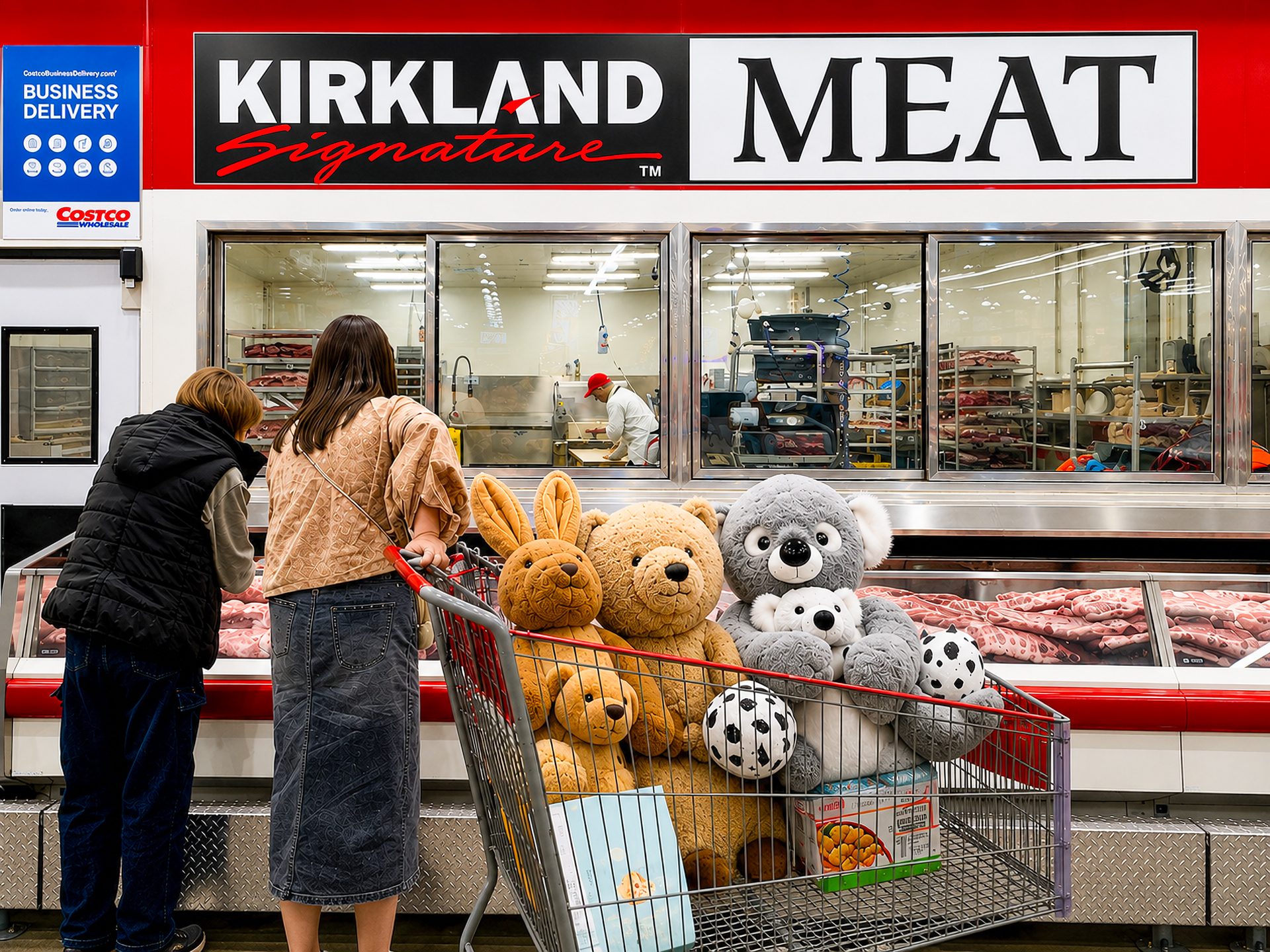
Costco Taiwan is a global phenomenon. With just 14 stores, it delivers outsized impact:
- US$6.4B in sales – 6.5% market share
- Growth: +12.1%
It has the strongest membership retention outside North America, and it hosts 4 warehouses in the global top 10 and 2 in top 3 by sales—including Taichung’s “World Store King.”
The formula blends high-volume bulk shopping with “prestige retail,” where luxury and status items sit alongside everyday essentials—driven by dense, loyal urban demand and exceptionally high store productivity
Convenience stores
Taiwan is one of the world’s most convenience-store-dense markets, with 13,706 stores (about 1 per 1,703 people – #2 globally after South Korea).
In-store, the format stays a true convenience store: hot food, snacks, ready-to-eat, drinks, coffee, essentials, H&B, and seasonal gift boxes—plus everyday service hubs: ATM, bill payments, ticketing, and parcel pick-up / drop-off for delivery and returns
No surprise with that number of stores and such high penetration: convenience stores are the island’s #1 grocery channel with:
- Sales : ~US$10.2B – 26.8% Market Share
- Growth: +5.2%
The Players:
7-Eleven dominates the channel with ~53% share and ~7,110 stores. Coffee is a major pillar via Prima Coffee. To stand out, 7-Eleven pushes differentiation through its Open-Chan mascot and a growing number of themed stores
FamilyMart is the #2 player with 4,000+ stores and ~35% share, offering a similar core experience but with a more Japanese-leaning assortment and private-label, and a stronger café push through Let’s Café Plus
Hi-Life, the #3 local chain (~10%, ~1,600 stores), competes mainly through functional convenience and local familiarity rather than heavy experiential concepts
Online grocery
Online grocery is now a meaningful layer in Taiwan’s mature market driven by convenience-led routines rather than a shift away from stores.
- Sales : ~US$2.2B
- Growth: ~+8%
E-commerce works best for packaged goods, replenishment, and urban households, where speed and repeat purchases matter
Platforms like Uber Eats and Foodpanda are expanding beyond food delivery into groceries, beverages, personal care, and other FMCG categories
Who the Taiwanese grocery shopper is
Taiwan has a highly mature, aging population with a trend toward increasingly smaller household sizes.
- Population: Around 23.4 million people in the mid-2020s, with a gradual decline expected as the society reaches “super-aged” status
- Household Structure: ~60% of households now consist of only 1 or 2 people, reflecting a significant rise in “solo living” and childless couples
- Aging Demographic: A large portion of grocery shoppers are aged 50+, representing a “Silver Economy” with high purchasing power and a focus on health-conscious products
Income profile
Taiwan is a high-income economy with a dominant, established middle class and high levels of discretionary spending.
- Average disposable income per household: Approximately US$36,500
- Median disposable income: Approximately US$29,800, among the highest in East Asia.
- Spending Power: Consumers aged 45–54 currently show the highest spending power, though the 25–35 demographic drives trends in premiumization and digital grocery platforms.
This income structure explains:
- Quality over Price: A shift from basic price sensitivity toward “value-for-money,” with a high willingness to pay for food safety, organic labels, and premium imports.
- Portion Control: High demand for single-serve packaging and ready-to-cook meal kits due to small household sizes and limited kitchen space in urban apartments.
- Hyper-Convenience: A preference for “top-up” shopping at convenience stores or supermarket chains (like PX Mart) located within walking distance of home.
Food-outside-the-home habits
Eating out is a core cultural pillar in Taiwan, supported by the highest density of convenience stores in the world.
- Frequency: About 70% of Taiwanese consumers eat out or buy take-out for at least one meal every day.
- Typical everyday spending (2026 estimates):
- Breakfast: 60–110 TWD (~US$1.9–3.4) — often from traditional breakfast shops or 7-Eleven/FamilyMart.
- Lunch (Bento): 110–180 TWD (~US$3.4–5.6).
- Dinner: 150–350 TWD (~US$4.6–10.8) — ranging from night market stalls to casual dining.
This behaviour reinforces the importance of:
- The “CVS” Culture: Convenience stores (7-Eleven, FamilyMart) acting as primary grocers for fresh milk, coffee, and chilled ready-meals.
- Retail Integration: Supermarkets that offer extensive “Hot Food” zones and seating areas to compete with restaurants.
We hope this article helps you get a clearer picture of the Taiwanese grocery retail market
Feel free to share your feedback in the comments, or let us know which other country you would like us to cover next.
Thank you
The WizArno Team
Discover More:


Sponsors link section – it will help to do new videos 🙏
Here you can read more on the Philippines:
Easy Tagalog Phrase Book: Over 1500 Common Phrases For Everyday Use – Kindle Edition
A History of The Philippines – Kindle Edition
Lonely Planet Philippines (Travel Guide) – Kindle Edition
If you like this post, please buy me a coffee
https://buymeacoffee.com/wizarno
🎥 Made with GoPro, iPhone, MacBook (affiliate links — supports the channel 🙏)
👉 Get them on Amazon: https://amzn.to/45Pmg84
$ Cheaper on Amazon Renewed: https://amzn.to/4mRpPRc
Watch this content securely with NordVPN
https://go.nordvpn.net/aff_c?offer_id=15&aff_id=108353&url_id=902







Leave a Reply